Friday, 13 December 2013

Pre-Production - Planning

There are many stages in the planning. after making the story and script. The first suggestion is a mood board. A Mood board is primarily a collage of images and texts, explaining what your idea is, what the story and how you want to present it, highlighting the styles you are looking at, the main points of the story, etc.

the main areas in planning are creating layouts and character designs. Layouts are mainly for the backgrounds and how the character should be made, i.e. their clothing, facial expressions, an so on. Its okay to create as many different designs you want on the character, as these ideas can be discussed until everyone is satisfied with it. these are also simple drafted drawings to give an idea of the setting for a story scene. showing the scene at a certain distance or angle can be an interesting look to appease the audience.

Other forms of character designs are made by a lot of drawings. so, some ideas should be tested out as concept art. these help give an idea on what style would look best on them, and whether or not the design looks on the character, or the character itself. once getting an idea of the character that is approved, you should create a model sheet of the final character to highlight the character shape and form. there should also be a series of other drawings expressing his movements and emotions, and any other possible outfit designs that could suit him/her. These final design sheets will help other artists and animators with the character creation and animation in the later production.

While characters and settings are worked on, the story can also be drafted in the form of a storyboard. Like a comic strip, but with captions at the bottom, you can simply explain the story in process, highlighting any proposed camera angles, how light or dark the scene could be, the position of the characters, being either close or far away, or if the camera is just on the one character. the storyboard should tell the story entirely as you've written, so it will take a lot of drawing spaces if you wish to give a full detail of the film.
http://www.bbc.co.uk/northernireland/myplacemyspace/images/inline/filming/storyboard-sample.jpg
The final step is putting everything into an animatic version of the film. This is simply using the storyboards as a source, and timing them to the length that you want for each frame. this will also have to synchronise with the sound effects and dialogue made during the pre-production of the film. The animatic should be as long as the film you intend to have. this can then be looked at the rest of the crew, and discuss any changes they wish to make in the story, etc. Once the final draft of the idea is positive, the idea will be taken to the production pipeline.

Pre-Production - Scripts

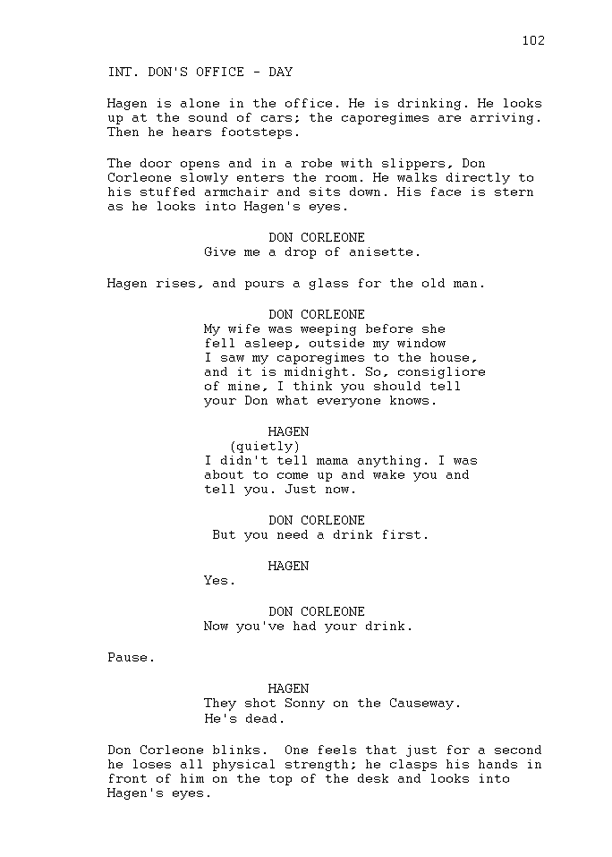
If you wish to have a character talking in the story, then they require dialogue. And for dialogue, an actor needs a script. A script is a written book of the story, with the actions and lines the characters would deliver. This gives the actor an idea on how to perform the character they are going for, and how they could deliver a voice for the character.
In this example below, we can see how a script should be laid out, making it easier to read for the actors. the text for dialogue should be aligned in the middle, separating the rest of the text which are the actions. the brackets in the dialogue illustrate the emotion or volume the character should deliver. In animation, only the dialogue is needed from the actors, but they still need to know how they should present it. acting it out can sometimes help them understand their character better, in order to feel more comfortable delivering dialogue.
source: http://filmschoolonline.com

Pre-Production - The Story Arc

The first thing that should be done in animation is the story. Whether its your own idea, or adapting from a book, you still need to write up the plot, the characters and the settings that are involved. In some cases, the plot can be at an ongoing process, like a book with many chapters. The story will take a lot of writing to make until it is satisfactory. sometimes, you'll have to re-write it a few times if some changes are needed.

There are eight points in the structuring a story. all of which flow into the plot and development on the character and background. If it is an everyday life scenario set in the story, that is called the "Stasis". In many major stories, there is the "trigger" and "quest" which involves the protagonist/hero and what they aiming for, like finding a map to an ancient treasure. Your story can have "surprise" which are several elements somewhere in the middle of the story, involving the character facing obstacles, conflict with another and any other type of trouble or danger. There should also involve the character having a "critical choice". This is like choosing the path between good or bad. If you aim for a unhappy ending, then it is most likely to consider the character making the wrong choice. All of this will result in the "climax" of the story. Almost drawing the end of the scene. The consequences of the choice can end with the "reversal" result on a character, changing their status and so on. And finally having the story resolved, having the character changed, but also ending the story. what reflects in the choice and climax, and even the reversal, the "resolution" can either be a good or bad ending for the character.

So in summary, an story arc requires:

  1. Stasis
  2. Trigger
  3. Quest
  4. Surprise
  5. Critical choice
  6. Climax
  7. Reversal
  8. Resolution